Conscious Evolution
I can recall a moment during my senior year of college, walking neither here nor there, and realizing that I had somehow not taken any courses in psychology. Philandering with English, Political Science, and Education, I had somehow avoided “Franz Hall.” I knew my money was running out, but I had a sudden urge to start over, and to redefine myself as a student of psychology. Of course this didn’t happen, but I still harbor a strong interest in the inner-workings and potential of the mind.
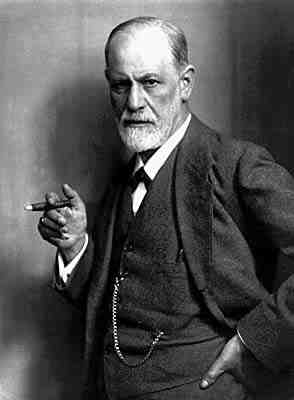
As a novice, I am still fascinated by and trying to understand the precise differences between the conscious and unconscious mind. Freud redefined the picture of the human mind with his publication of The Interpretation of Dreams, which later became a centerpiece to psychoanalysis (Rivkin 299). “His discovery was that the human mind contains a dimension that is only partially accessible to consciousness and then only through indirect means such as dreams or neurotic symptoms. The ‘unconscious,’ as he called it, is a repository of repressed desires, feelings, memories, and instinctual drives, many of which, according to Freud, have to do with sexuality and violence” (Rivkin 299). This discovery has led our culture to a collective self-awareness that did not exist before the mind was seen as a unified whole. I view New Age spiritual leaders, in addition to psychoanalysts, as building upon this epiphany.
In particular, Echart Tolle, bases his entire bestselling New Age book, A New Earth on transcending the ego-based state of consciousness. Much of his writings are loosely connected to Freud’s ideas of not only the conscious and unconscious mind, but also the separate entities of the Id, Ego, and Super-Ego. I wonder if it’s evolutionary possible to omit the Id, and reside entirely in the Super-Ego. Perhaps this is part of Echart Tolle’s vision when he says, “The greatest achievement of humanity is not its works of art, science, or technology, but the recognition of its own dysfunction, its own madness… a new dimension of consciousness had begun to emerge on the planet, a first tentative flowering.” (Tolle 14). Much of our evolutionary understanding of the mind is based upon Freud’s work. While sometimes controversial, he has left an enormous impact on human progress.
Works Cited
Literary Theory, an Anthology (Blackwell Anthologies). Grand Rapids: Blackwell Limited, 2004. Print.
I can recall a moment during my senior year of college, walking neither here nor there, and realizing that I had somehow not taken any courses in psychology. Philandering with English, Political Science, and Education, I had somehow avoided “Franz Hall.” I knew my money was running out, but I had a sudden urge to start over, and to redefine myself as a student of psychology. Of course this didn’t happen, but I still harbor a strong interest in the inner-workings and potential of the mind.
As a novice, I am still fascinated by and trying to understand the precise differences between the conscious and unconscious mind. Freud redefined the picture of the human mind with his publication of The Interpretation of Dreams, which later became a centerpiece to psychoanalysis (Rivkin 299). “His discovery was that the human mind contains a dimension that is only partially accessible to consciousness and then only through indirect means such as dreams or neurotic symptoms. The ‘unconscious,’ as he called it, is a repository of repressed desires, feelings, memories, and instinctual drives, many of which, according to Freud, have to do with sexuality and violence” (Rivkin 299). This discovery has led our culture to a collective self-awareness that did not exist before the mind was seen as a unified whole. I view New Age spiritual leaders, in addition to psychoanalysts, as building upon this epiphany.
In particular, Echart Tolle, bases his entire bestselling New Age book, A New Earth on transcending the ego-based state of consciousness. Much of his writings are loosely connected to Freud’s ideas of not only the conscious and unconscious mind, but also the separate entities of the Id, Ego, and Super-Ego. I wonder if it’s evolutionary possible to omit the Id, and reside entirely in the Super-Ego. Perhaps this is part of Echart Tolle’s vision when he says, “The greatest achievement of humanity is not its works of art, science, or technology, but the recognition of its own dysfunction, its own madness… a new dimension of consciousness had begun to emerge on the planet, a first tentative flowering.” (Tolle 14). Much of our evolutionary understanding of the mind is based upon Freud’s work. While sometimes controversial, he has left an enormous impact on human progress.
Works Cited
Literary Theory, an Anthology (Blackwell Anthologies). Grand Rapids: Blackwell Limited, 2004. Print.
Tolle, Eckhart. A New Earth Awakening to Your Life's Purpose. New York: Plume, 2006. Print.


No comments:
Post a Comment